
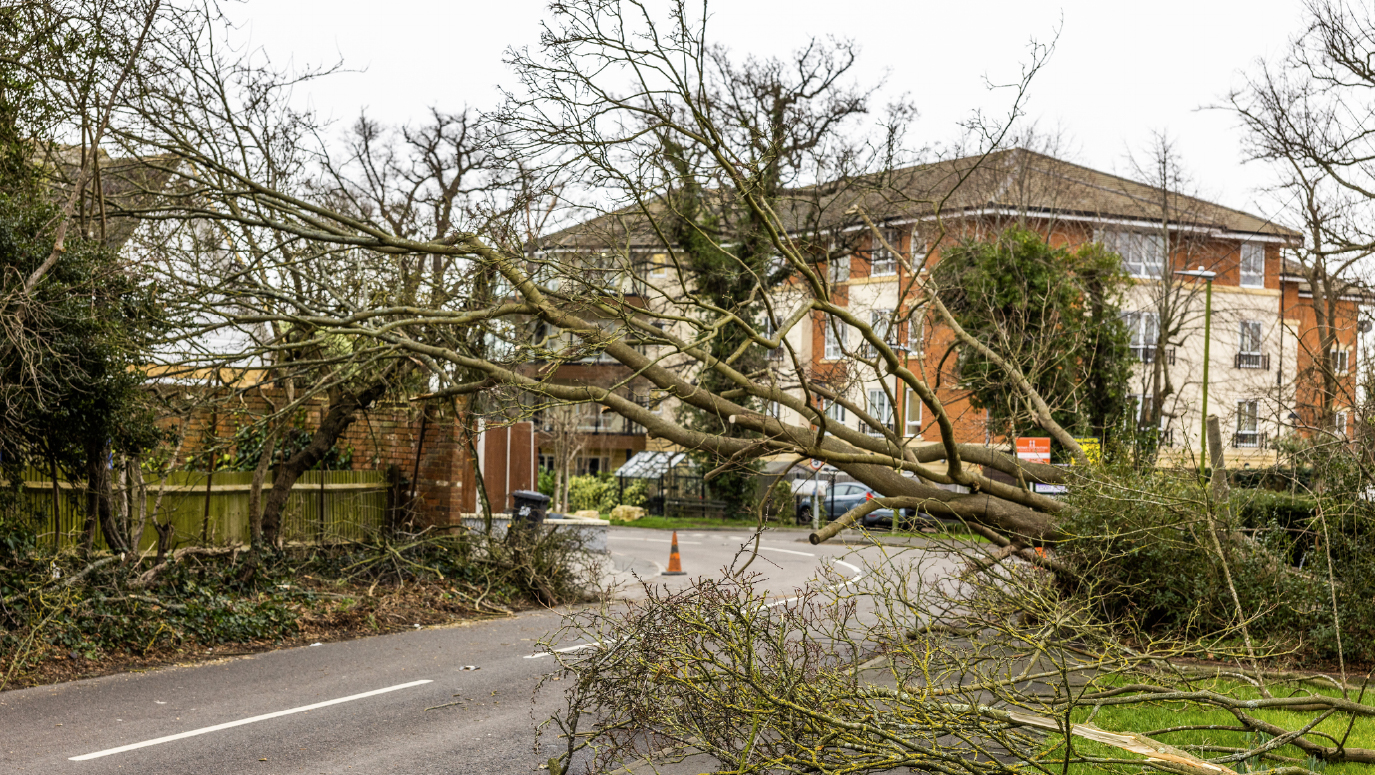
If there’s a storm coming, or it has already happened, it's important to take steps to protect yourself and your home.
Once the weather improves you can then safely assess any damage, start making repairs, or begin an insurance claim.
What to do when a storm is coming
- Close and lock all windows and doors.
- Draw curtains or blinds.
- Unplug anything electrical you don't need.
- Park your car in a garage or away from trees.
Go to our full storm preparation checklist for more details.
What to do during a storm
- Stay indoors and keep away from windows and doors that lead outside.
- Avoid travelling unless it's absolutely essential.
- If you’re away from home, seek shelter in a public building or stay safely in your vehicle.
- Keep clear of trees, fences and overhead cables.
What to do after a storm
- Inspect any damage, but stay on the ground. Don't climb onto the roof. Use binoculars or the zoom function on your phone's camera.
- Take photos or video of the damage before moving or repairing anything.
- Make temporary repairs, if it's safe and if you're confident. For example, covering exposed areas with with tarpaulin.
- Keep itemised receipts for any emergency repairs you carry out.
- Decide if you want to make a claim on your home insurance.
More on fixing the damage
If you find yourself in need of emergency repairs to make your home safe, get in contact with a local qualified tradesperson as soon as possible. Remember to ask for an itemised invoice and keep all the receipts.
To help you find a local qualified tradesperson, we recommend contacting your insurance company. They should be able to arrange a call between you and a qualified tradesperson, so you receive immediate advice.
If your gas, water or electricity supplies are affected, get in touch with your supplier as soon as possible. You can normally find their number at the top of one of your monthly bills.
What we class as a storm
In the world of insurance claims, we refer to a storm as a period of violent weather that includes one or more of the following:
- Wind speeds with gusts of at least 55 mph
- Torrential rainfall of at least 25mm per hour
- Snow to a depth of at least one foot (30cm) in 24 hours
- Hail that causes damage to hard surfaces or breaks glass
To check wind speed, rainfall or temperature in your area, the Met Office has a handy map, with everything you need to know.
What does your home insurance cover?
Not all insurance policies are the same, so check your policy before making a claim. To give you an idea, this is what we cover (and what we don’t):
We cover:
✓ Damage to your buildings caused by flood.
✓ Damage to your buildings caused by storm.
✓ Damage caused by falling trees or branches.
✓ Damage caused by water escaping from underground pipes or water tanks.
✓ Damage caused by falling TV aerials, radio aerials, or satellite dishes.
✓ Alternative accommodation while your home is being repaired, if it's uninhabitable after a valid claim.
We don't cover:
⊗ Loss or damage due to wear and tear or lack of maintenance.
⊗ Damage caused to fences, gates or hedges.
⊗ Frost damage to external water or tanks.
⊗ Some damage that occurs when your home is unoccupied for 60 days or longer.
⊗ Loss or damage that took place before your cover started.
Check your excess
If you're eligible to make a claim, you’ll need to pay an excess. Check how much you’ll pay for an escape of water, subsidence or other claims. You can find details and update your cover in the app.
If you need to claim on your insurance
If you’re a Direct Line policyholder, your safety and wellbeing are our priority. In the event of storm damage to your property, let us know as soon as possible.
If you can do so safely, take photographs of the damage to your building and contents (or film it); this may help with your claim.
During severe weather our phone lines get very busy. If you need to make a claim, avoid waiting by using the Direct Line app or your online account. Here’s how:
- Sign into your account online or in the app
- Log your claim securely, step by step
- Save details as you go
- Add supporting evidence quickly and easily
- Manage your claim in your own time
- View repairer details and track progress
If you have a question or need more help, visit our help page.


