If you’re firing up the barbecue or gathering around a fire pit this summer, it’s important to remember that naked flames come with risks.
Every year, avoidable accidents lead to property damage and injuries. But you don’t need to ditch your plans. Follow our simple advice to help keep everyone safe and your property intact.
Barbecue safety: what you need to know
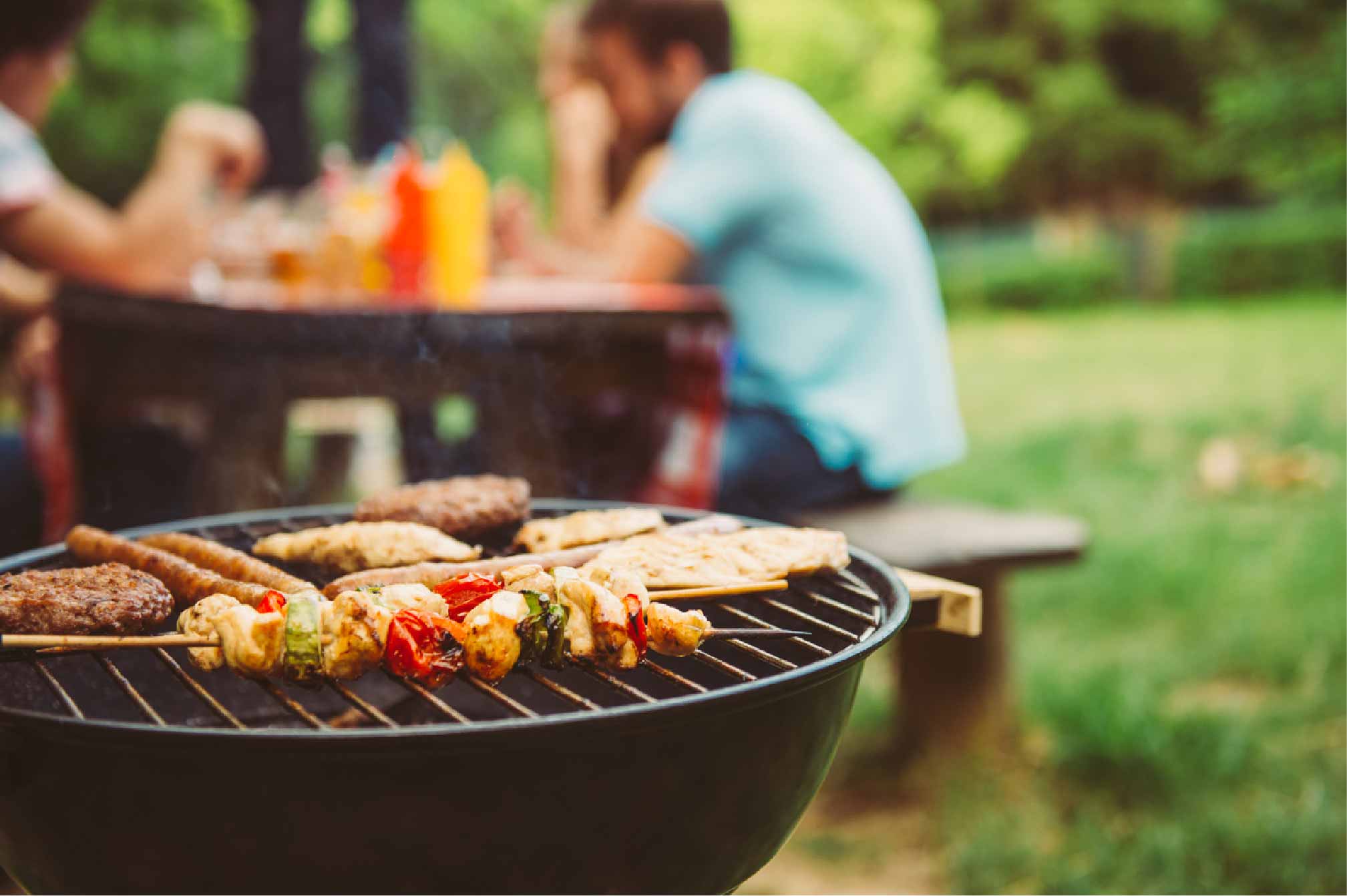
Slap the sausages on the grill! There’s nothing better than a summer barbecue.
Unfortunately, they’re also a cause of garden fires, especially during hot, dry weather. Remember to set up properly and stay alert while cooking.
- Choose a stable spot
Always place your barbecue on flat, level ground to prevent it tipping over. - Keep a safe distance
Position it well away from your home, sheds, fences, garden furniture and anything flammable. Avoid placing it under trees or near dry plants. - Think about foot traffic
Don’t put barbecues where people need to squeeze past. - Use the right fuel
Only use approved charcoal, gas or firelighters. Never use petrol, paraffin or other accelerants — they can cause dangerous flare-ups. - Always supervise
Never leave a lit barbecue unattended, even for a few minutes. - Create a hazard-free zone
Keep play areas, toys and animals well clear of the cooking space. - Let it cool properly
Don’t attempt to move or store your barbecue until it’s completely cool.
Gas barbecue safety
Gas appliances need extra attention to avoid leaks and carbon monoxide risks.
- Turn off all controls and valves before changing the gas cylinder. Always do this outdoors in a well-ventilated space.
- When you’ve finished cooking, turn off the gas cylinder first to burn off any remaining gas.
- Store gas cylinders outside, upright, and away from direct sunlight or frost. Avoid keeping more than you need.
- Never use gas-powered barbecues, heaters or lights indoors or in enclosed spaces — this can lead to carbon monoxide build-up.
- Always follow the manufacturer’s instructions for safe use and maintenance.
For further information on gas safety, visit the Gas Safe Register.
Garden fire safety: reducing the risks
Fire pits can quickly get out of control if you’re not careful, but there are a few precautions you can take to lower the risk.
- Check the weather
Don’t light fires in windy conditions. Flames and embers can spread. - Pick the right location
Keep fires well away from buildings, fences, hedges and anything that could catch alight. - Never use flammable liquids
Petrol and similar substances can cause sudden, uncontrollable flames. - Only burn appropriate materials
Never burn aerosols, paint tins, batteries, foam furniture or other hazardous waste — they can explode or release toxic fumes. - Keep extinguishing tools nearby
Have a bucket of water, sand or a hosepipe ready in case the fire needs to be controlled quickly. - Check before lighting
Lookout for wildlife. Small animals may nest or shelter in garden waste piles. - Stay with the fire
Never leave the fire unattended. If you need to step away, fully extinguish or damp it down first.
What if something goes wrong?
If a fire spreads or someone’s injured, call emergency services immediately. Acting quickly can prevent a small incident becoming a major one.
A bit of planning goes a long way. With the right safety measures in place, you can enjoy your garden all summer long.