Did you know that over half of household fires in England are caused by domestic appliances? In fact, in the year ending March 2024, Fire and Rescue Services attended more than 23,000 home fires – with around 12,000 linked to electrical appliances.
Cooking equipment, tumble dryers, and washing machines are among the biggest culprits, while fires caused by chargers have more than doubled in recent years.
With so much technology in our homes these days, it’s important to stay up to date on electrical fire safety. Below are some common hazards to watch out for, and practical tips to help reduce the risk of an electrical fire in your home:
What are the most common electrical hazards?
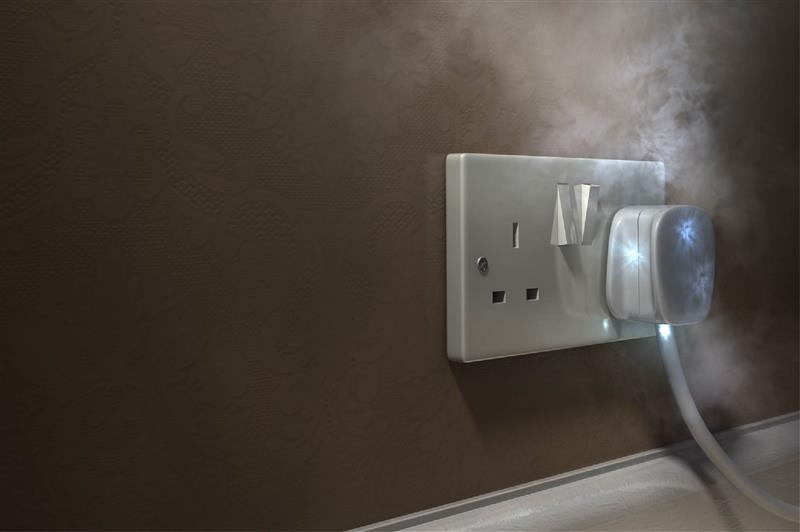
- Hot plugs and sockets: If they feel warm or show scorch marks, unplug immediately and check for faults. A hot plug is very dangerous and can quickly become a fire.
- Badly wired plugs: Exposed wires can let in dirt or moisture. Not only can they give you a nasty electric shock, but they’re also a fire hazard. Replace or repair a badly wired plug if you can do so safely, otherwise call an electrician.
- Fraying power leads: Damaged cables, especially phone chargers, should be replaced straight away.
- DIY repairs: Taping over split leads or broken plugs is dangerous. Always replace worn leads with new cables or new appliances to stay safe.
- Cables: Keep all electrical wires away from water, cookers, and areas where children or pets might pull them. Fires can start in seconds, so if you’re thinking about plugging an appliance somewhere risky – even temporarily – it’s not worth it.
- Lightbulbs: Use the correct wattage for your lamp to avoid overheating and never cover a lamp.
- Keep water away from electrics: Drinks and liquids can easily spill on to plugs and devices, so keep them well away before they spark, overheat, or cause an electrical fire.
- Toasters: Clean the crumb tray regularly and keep your toaster away from any flammable items.
Don’t overload your sockets!
Extension leads can be a serious fire hazard. If one socket is used to power too many appliances, it can quickly overheat and cause a fire. Follow these tips to avoid overloading your sockets and stay safe:
- Only use extension leads when your lead is too short to reach the wall socket.
- Use an “inline” extension lead – with sockets in a row – rather than cube adapters.
- Never “daisy chain” multiple extensions together. Remember, if all the power is coming from a single socket it can easily overheat and become dangerous.
- Check that whatever you plug into your extension lead doesn’t exceed its rating. The total load should be kept under 13 AMP (3,000 watts).
- Never plug more than one appliance that uses a lot of electricity, such as a tumble dryer or a kettle.
- If you need to use an extension lead outside, use outdoor-rated, waterproof lead.
Remember: safety first
- Switch off as many appliances as possible overnight or when you go away.
- Don’t leave phones plugged into your charger once they’re fully charged.
- Carry out regular checks on your sockets, extension leads and cables.
- If a fire does break out, call 999 immediately and evacuate safely. Never risk your life to save your possessions.
Getting help after a fire in your home
If you need to make a claim after a fire, your insurer should give you support to get you and your home back on track. Check your policy to get clear on what you are or aren’t covered for. If you’re a Direct Line policyholder, you can log your claim online or via the Direct Line app.