Most of us are very careful about protecting our homes. But we don’t often consider the contents of our gardens, such as ornaments, expensive plants, and the power tools in our garden sheds.
Unfortunately, winter brings shorter days and darker nights, giving thieves more opportunities to strike. Shed and garden burglaries are more common in the colder months, with figures from the Office for National Statistics indicating that theft from outside our homes reached a ten-year high in the year ending March 2025.
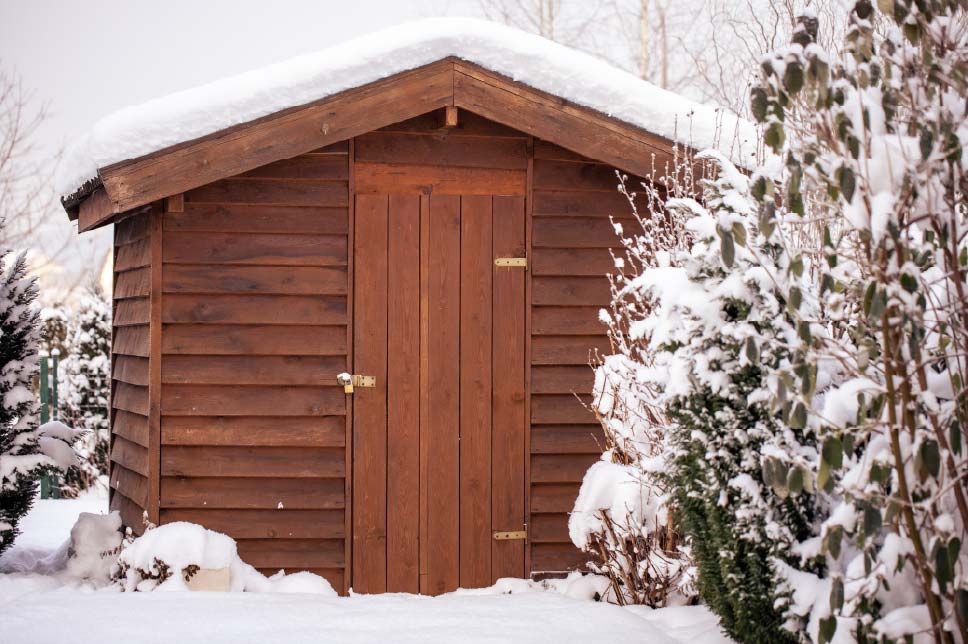
Protect your garden shed from burglars
Don’t let your tools, bikes or garden furniture become easy targets. We’ll show you how to lock down your outdoor space and keep your belongings safe.
And, if you use a shed or outbuilding as a home office, be particularly careful. Laptops, monitors and phones are all too tempting for thieves. A good rule is to keep your shed locked when you’re not in it.
Why is winter high risk for shed break-ins?
Burglary rates peak in the winter months because darkness gives criminals the perfect cover. They know we keep expensive items like bikes and power tools in our sheds, plus they’re easier to access than our homes.
Many of us stay inside for much of the winter, meaning you may not notice someone lurking at the bottom of your garden. That’s why it’s important to check you’ve secured your shed properly.
What are burglars looking for?
Thieves typically choose a shed that’s away from prying eyes, perhaps in an obscure corner of the garden. They also want to be able to get in and out quickly, under the cover of darkness. Anything that slows them down or makes a noise will put them off – especially if they don’t know whether there’s anything of value inside.
There isn’t much you can do about the location of your outbuildings, but there are things you can do to deter would-be thieves from breaking in.
Top tips to keep your shed secure
1. Upgrade your locks
Unfortunately, savvy thieves know how to break a padlock in seconds. Instead, the police recommend fitting a closed-shackle padlock and tamper-proof hinges secured with coach bolts. These are harder to cut or unscrew than standard fittings and will slow a potential thief down, or deter them from even trying to break in.
2. Install smart security
If you have the budget, consider installing CCTV around your property, or invest in a PIR camera or alarm. PIR stands for Passive Infra-Red – it detects heat and movement, triggering an alert or recording only when something warm (like a person) enters its range. This reduces false alarms caused by wind or shadows that are common with motion-sensor cameras.
Bear in mind that cameras can be very costly and won't reduce your premium, but they can offer you peace of mind that your belongings are safe.
3. Light it up
Motion-sensor lights suddenly throw any intruders into the spotlight – the opposite of sneaking in unseen. The second they’re lit up, most thieves will run off into the night. Position your motion-sensor lights near entry points and pathways to catch burglars before they get anywhere near your valuables.
4. Reinforce shed windows and doors
Fit security film or bars on the windows of your shed, or add internal bolts or a shed security bar across the door. If you have an expensive bike, consider wall-mounting it or locking it to a ground anchor inside the shed.
5. Anchor your shed
If your shed is lightweight, secure it to a concrete base or use ground anchors. This will make it harder to move or tip over.
Don’t forget your plants!
Plant theft is on the rise in the UK. If you have some particularly pricey shrubs in your garden, it’s worth looking after them. Secure pots with anchors to make them harder to move.
You may also want to mark your postcode on any important items with indelible ink, so if it’s stolen and then recovered, there’s a better chance of it finding it’s way back to you.
You can also deter thieves by making access more difficult. Natural defences like holly bushes or dense shrubs around the boundaries of your garden can be off-putting to burglars who’ll want to get in and out as quickly as possible.
Adding gravel to paths and driveways can help too, as the noise makes it harder for thieves to sneak around.
Check your insurance
Not all home insurance policies cover sheds, outbuildings, plants or expensive bikes, so it’s worth checking your policy to see whether you have the right cover in place.
If you have high-value items like road bikes or power tools, you may need to list them separately. You should also check for any policy limits or exclusions. For example, if you keep your bicycle in a shed or outbuilding, it may only be covered for theft if it’s been locked securely to an immovable object using an approved lock.
Remember, burglars want to get in and out of your shed as quickly as possible. Anything you can do to slow them down, light them up or generally make the job harder for them, will help keep your belongings secure.